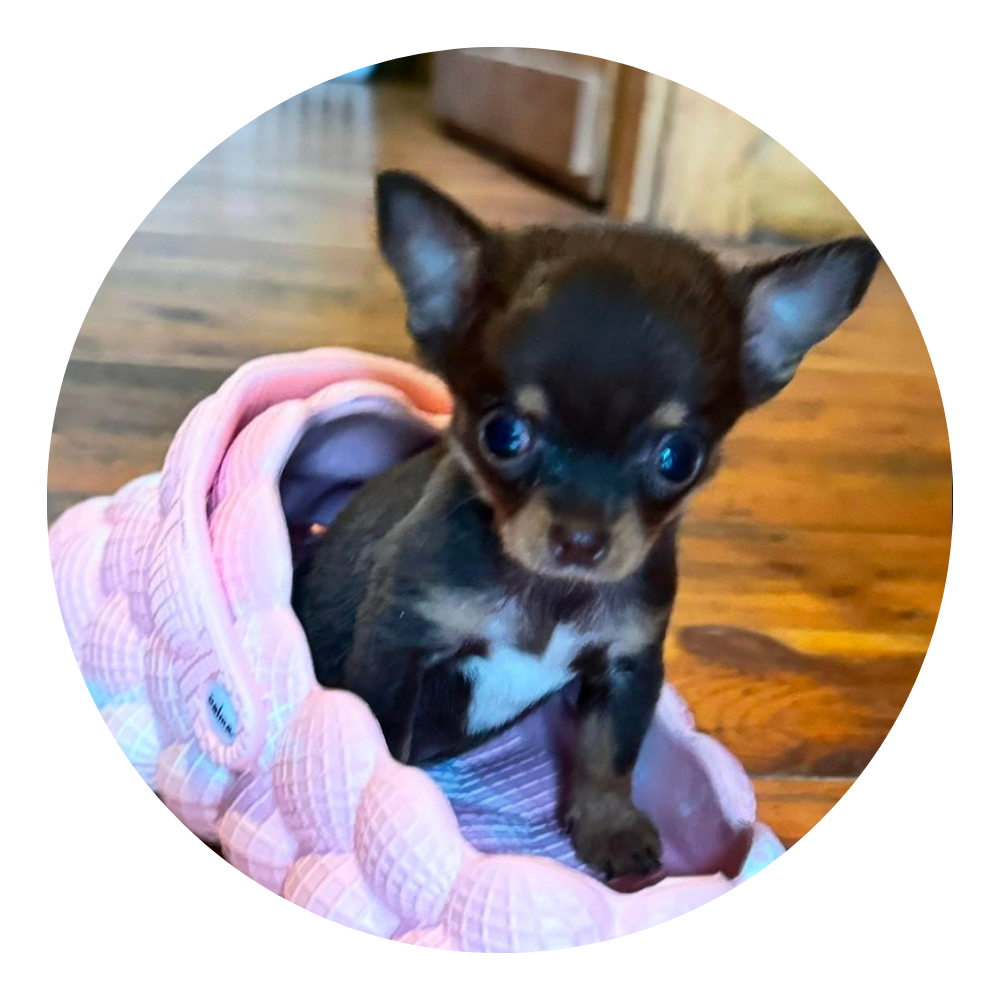
The Rare Beauty of the Blue Merle: A Complete Guide to This Stunning Chihuahua Variety

Posted on April 2, 2026
The world of Chihuahuas is vast and colorful, but few varieties capture the imagination quite like the Blue Merle. With its striking marbled coat, "ghostly" blue eyes, and one-of-a-kind patterns, the Blue Merle Chihuahua stands out as a masterpiece of nature. However, because this coat pattern is as complex as it is beautiful, it requires a specialized understanding of genetics, health, and ethical breeding.
In this guide, we dive deep into the allure of the Blue Merle, exploring what makes them rare, how they are raised, and what you need to know before bringing one of these tiny gems into your home.
Understanding the Blue Merle Coat Pattern
The term "Merle" doesn't refer to a breed, but rather a specific genetic pattern that affects the way pigment is distributed across a dog’s coat. In a Blue Merle Chihuahua, the base color is diluted, creating a mottled or marbled effect of charcoal, silver, and soft blue-grey patches.
No two Blue Merles are ever identical. The "randomness" of the pattern is part of the appeal; one puppy might have a face split perfectly between two colors, while another might have tiny "freckles" of blue across a silvery back. This visual uniqueness makes them highly sought after by enthusiasts who want a dog that truly stands out in a crowd.
The Genetics Behind the Marbling
To appreciate the Blue Merle, one must understand the Merle gene ($M$). This gene is responsible for "breaking up" the solid color of the coat. When a dog carries the Merle gene, it lightens parts of their coat to a bluish-grey while leaving other parts the original darker color.
However, the beauty of the Merle gene comes with a responsibility for the breeder. It is a dominant gene, meaning a dog only needs one Merle parent to inherit the pattern. The complexity arises because of the "Double Merle" risk. If two Merle dogs are bred together, there is a $25\%$ chance that the puppies will inherit two copies of the gene ($MM$). This often leads to significant health issues, which is why ethical breeders are extremely selective and meticulous in their pairings.
The Striking Blue Eyes of the Merle
One of the most enchanting features of the Blue Merle Chihuahua is the high likelihood of Heterochromia—a condition where the dog has two different colored eyes—or "cracked" eyes, where a single eye contains two different colors.
It is common to see a Blue Merle with one piercing blue eye and one deep brown eye. This occurs because the Merle gene doesn't just affect the fur; it also affects the pigment in the iris. These "glass eyes" give the Chihuahua an ethereal, wolf-like expression that contrasts beautifully with their tiny, delicate features.
Why the Blue Merle is Considered Rare
While Chihuahuas come in many colors—fawn, chocolate, black, and white—the Blue Merle remains a rarity. This is partly due to the careful breeding required to produce them safely and partly because the gene is not as widespread in the traditional Chihuahua gene pool.
Because they are less common, Blue Merle puppies are often the "stars" of a litter. Finding a breeder who specializes in this variety while maintaining the health and temperament standards of the breed is essential. A rare color should never come at the cost of a dog's well-being, which is why home-raised environments are so beneficial for these specific pups.
Health and Longevity in Blue Merle Chihuahuas
There is a common misconception that all Merle dogs have health problems. This is simply not true. A "Single Merle" (a dog with only one Merle parent) is typically just as healthy and long-lived as any other Chihuahua, often reaching ages of 15 to 20 years.
The health concerns associated with Merles—such as hearing or vision impairment—are almost exclusively linked to irresponsible "Double Merle" breeding. When you adopt from a breeder who understands genetic testing and prioritizes the health of the Sires and Dams, your Blue Merle will likely be a robust, energetic, and thriving companion. Regular vet checks and high-quality nutrition are the same for a Merle as they are for a Short Hair or Long Hair variety.
Temperament: Big Personalities in Marbled Coats
Does the coat color affect the personality? While there is no scientific evidence that color dictates temperament, owners of Blue Merles often describe them as particularly "expressive."
Like all Chihuahuas, the Blue Merle is a "big dog in a small body." They are fiercely loyal, incredibly affectionate, and often form a "velcro" bond with one specific member of the family. Because they are so striking to look at, they often receive a lot of attention in public, which helps them develop a social and confident personality if they are socialized early in life.
The Importance of Early Socialization
Because Blue Merles are often seen as "trophy" dogs due to their beauty, it is vital that they are raised in an environment that treats them as a dog first and a showpiece second. A puppy raised "underfoot" in a busy home becomes accustomed to the sounds of a household, the touch of children, and the presence of other pets.
Socialization prevents the "nervous Chihuahua" stereotype. A well-adjusted Blue Merle should be curious and bold. When they are handled from birth and exposed to different stimuli—like those found in a family-oriented breeding home—they grow up to be well-rounded adults who can handle travel, visitors, and new experiences with ease.
Grooming Your Blue Merle Chihuahua
Grooming requirements for a Blue Merle depend on whether the dog has a Long Hair or Short Hair coat.
- Short Hair Merles: These are low-maintenance. A weekly brushing with a soft-bristled brush will keep their coat shiny and help the marbled colors pop.
- Long Hair Merles: These require more frequent brushing (2-3 times a week) to prevent mats in their silky fur, especially behind the ears and under the legs.
Regardless of coat length, the Blue Merle benefits from regular baths to keep their skin healthy. Because their coat is their most striking feature, keeping it clean ensures that the "blue" tones in their fur remain vibrant and clear.
Finding an Ethical Blue Merle Breeder
If you have fallen in love with the Rare Blue Merle, your next step is finding the right breeder. An ethical breeder will:
- Provide Pedigree Documentation: Show that the puppies are registered (such as with the CKC).
- Be Transparent About Parents: Allow you to meet the mother and see the environment where the puppies are raised.
- Prioritize Health Over Color: They should be able to explain their breeding process and how they avoid "Double Merle" pairings.
- Offer Post-Adoption Guidance: A good breeder cares about where the puppy goes and remains a resource for the new owner.
Is the Blue Merle Right for You?
The Blue Merle Chihuahua is perfect for someone who appreciates the artistry of nature and wants a companion that is truly unique. They are well-suited for apartment living, great for individuals or families with respectful children, and make excellent travel companions due to their size.
When you bring a Blue Merle into your home, you aren't just getting a pet; you are getting a conversation starter, a loyal protector, and a tiny work of art. Their rare beauty is matched only by their massive hearts.
Final Thoughts on This Unique Variety
The Blue Merle remains one of the most mesmerizing sights in the canine world. From their marbled coats to their sparkling blue eyes, they remind us of the incredible diversity within the Chihuahua breed. By choosing a puppy that has been raised with love, socialized with family, and bred with a focus on health, you ensure that your Blue Merle will be a source of joy and beauty for many years to come.
Are you ready to meet your match? Explore the world of Tammy’s Chihuahuas and see if a Blue Merle is waiting to join your family.